
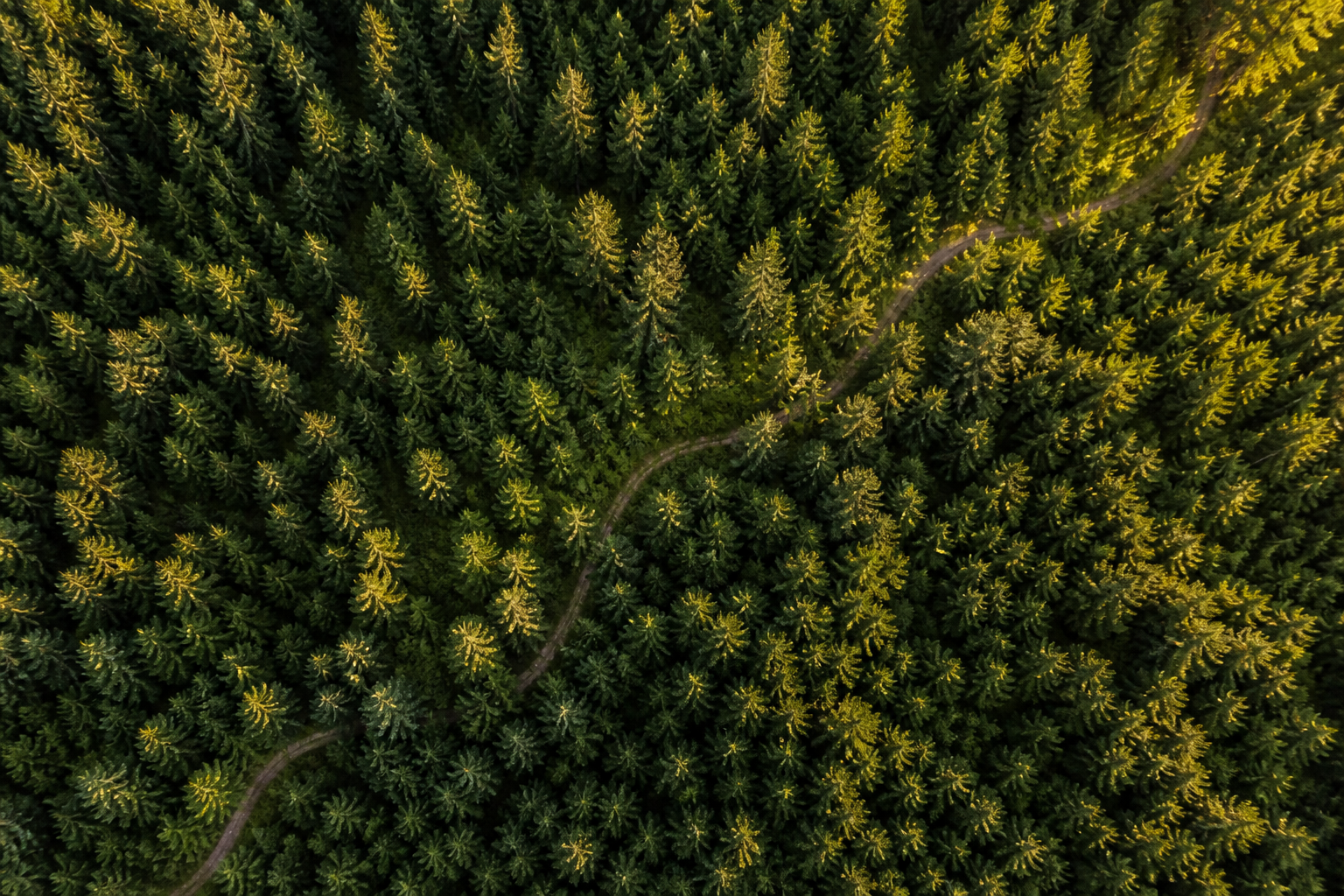
Responsibly Sourced Timber, From Forest to Project
Premium British Columbia timber backed by strong forest regulation, with our core timber sourced from mills with PEFC-recognised forest certification.
At Simply Oregon, sustainability means looking beyond distance alone. It means understanding where timber comes from, how the forest is managed, how it is processed and how it reaches Australia.
For architects, developers, builders and individuals making considered material choices, those details matter.
Forests managed for the future
All of our timber is sourced from British Columbia, Canada, where forestry is governed by extensive laws and regulations covering forest planning, biodiversity, soils, water, wildlife habitat, harvesting and reforestation. On public land, harvested areas subject to reforestation obligations must be successfully regenerated.
305 million seedlings
planted in B.C. in 2023 alone.
Source: Government of B.C.
Less than 1%
of B.C.'s public timber harvesting land base is harvested in a typical year.
Source: Government of B.C.
14.4 million hectares
protected within B.C.’s parks and protected area system.
Source: BC Parks
10 billion trees
planted through B.C.'s reforestation programs.
Source: Government of B.C.
Predominantly second-growth timber
The overwhelming majority of the timber we import is second-growth timber — sourced from forests that have regenerated following previous harvesting.
Young and actively growing forests can sequester carbon at high rates as new wood, roots and biomass are produced. Canadian forestry research has shown that younger, rapidly growing stands can have high rates of carbon uptake as forests regenerate and accumulate biomass.
Sources: Foothills Model Forest carbon study – Hinton/Jasper region | Statistics Canada – Forests in Canada
In a responsibly managed forestry cycle, carbon can remain stored in timber used in long-lived buildings and products, while regenerated forests begin another period of active growth and carbon uptake.
Old-growth forests remain highly important for biodiversity, ecological values and their substantial existing carbon stores.
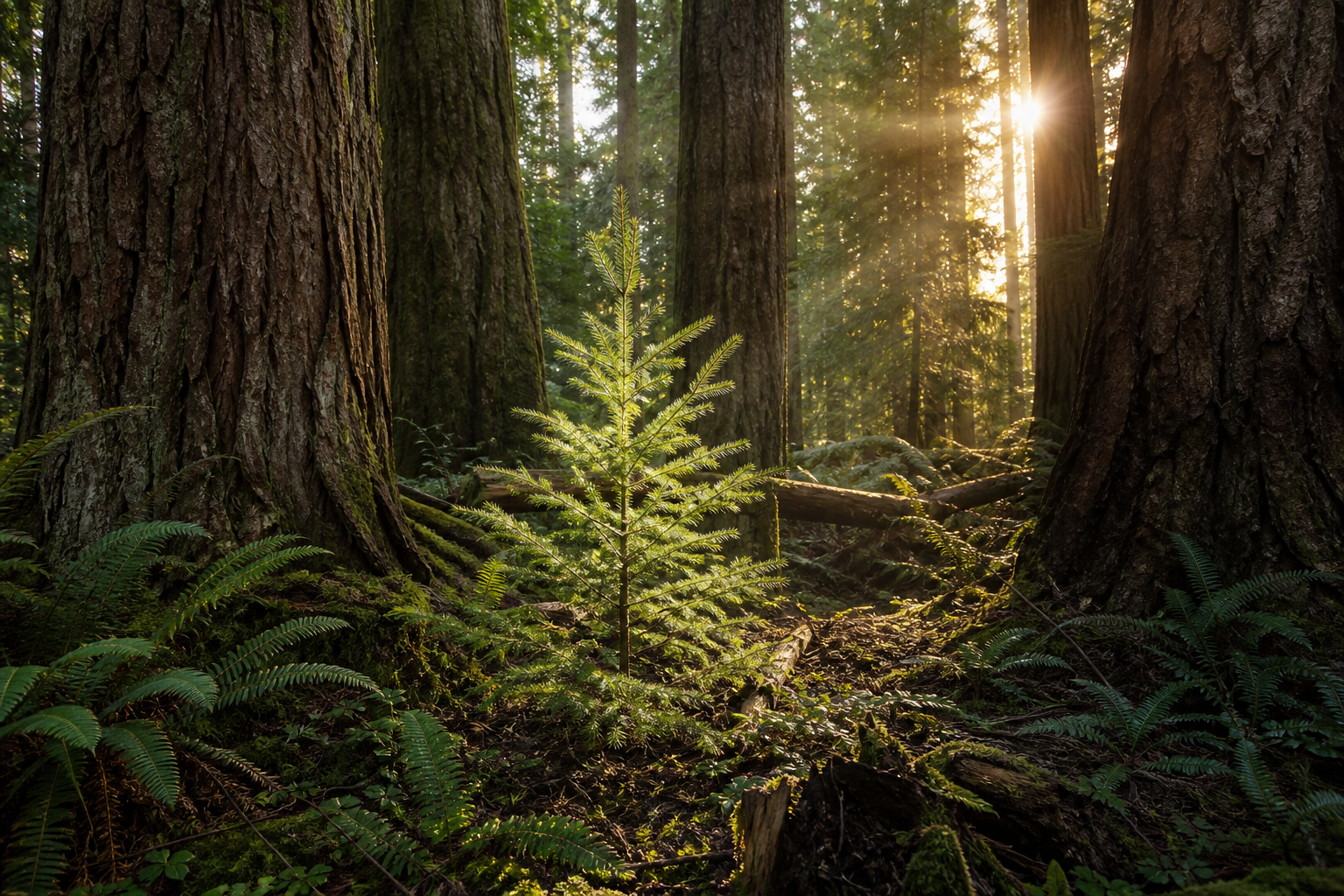
Independently certified supply
Our core timber is sourced from mills with PEFC-recognised forest certification.
PEFC — the Programme for the Endorsement of Forest Certification — provides independent assurance around sustainable forest management and responsible sourcing. In Canada, this includes recognised systems such as the Sustainable Forestry Initiative (SFI).
For architects and specifiers requiring sourcing information, relevant mill certification documentation can be provided on request.
Sources: PEFC – Canada | PEFC – Sustainable Forestry Initiative (SFI)
Indigenous participation in forest stewardship
Forestry in British Columbia increasingly involves First Nations as rights holders, forest managers, tenure holders, business owners and partners in land-use planning.
B.C.'s forest-management system places increasing emphasis on partnership with First Nations in decisions involving biodiversity, watersheds, cultural values, ecosystem health and sustainable timber supply.
Responsible sourcing is not only about the trees. It is also about how forests are managed and who has a voice in their future.
Sources: Government of B.C. – Indigenous partnerships in silviculture | Government of B.C. – Working with Indigenous partners
Transport, Energy and Embodied Carbon
Distance doesn't tell the whole story - Vancouver is roughly 13,000 kilometres by sea from Melbourne. At first glance, imported Canadian timber may seem less sustainable than timber sourced within Australia. But kilometres travelled are only one part of a product's environmental footprint.
Ocean freight is highly efficient - Large container ships move enormous quantities of material with relatively low emissions per tonne-kilometre. This matters when comparing Canadian timber shipped efficiently by sea with Australian timber used in Melbourne. Many Australian hardwoods and other species are sourced from forests and mills in Queensland and northern New South Wales, meaning they may already have travelled substantial distances by heavy vehicle before reaching a Melbourne project. So while Canadian timber travels further overall, much of that journey is by efficient ocean freight. Australian timber may travel fewer kilometres, but a much greater proportion of the journey can be by road.
The closest forest is not necessarily the lowest-carbon supply chain.
Low-carbon energy and efficient transport
British Columbia also has one of the cleanest electricity systems in North America.
More than 98% of the electricity generated by BC Hydro comes from clean, renewable sources, with hydroelectricity providing the overwhelming majority of the province's power.
Source: BC Hydro – Our clean system
The supply chain can also benefit from efficient water and rail transport. In coastal forestry regions, logs can be transported by water to mills, while rail provides an efficient connection between timber-producing regions and West Coast export ports.
Together, low-carbon electricity and efficient water, rail and ocean transport can create a very different emissions profile from a supply chain more heavily dependent on road freight and fossil-fuel-based energy.
Timber you can specify with confidence
Simply Oregon supplies premium British Columbia timber to architects, builders, developers, engineers and specialist industries throughout Australia.
Our aim is not simply to say our timber is sustainable. It is to provide enough information about where it came from and how it was produced for our customers to make an informed decision.
Planning a project where responsible timber sourcing matters?
Sources & further reading
The sustainability information above draws on data published by the Government of British Columbia, BC Parks, BC Hydro, PEFC and Canadian forestry research. The links below provide access to the original sources.